上下文 - context
Context是由Golang官方開發的併發控制包,一方面可以用於當請求超時或者取消時候,相關的goroutine馬上退出釋放資源,另一方面Context本身含義就是上下文,其可以在多個goroutine或者多個處理函數之間傳遞共享的信息。
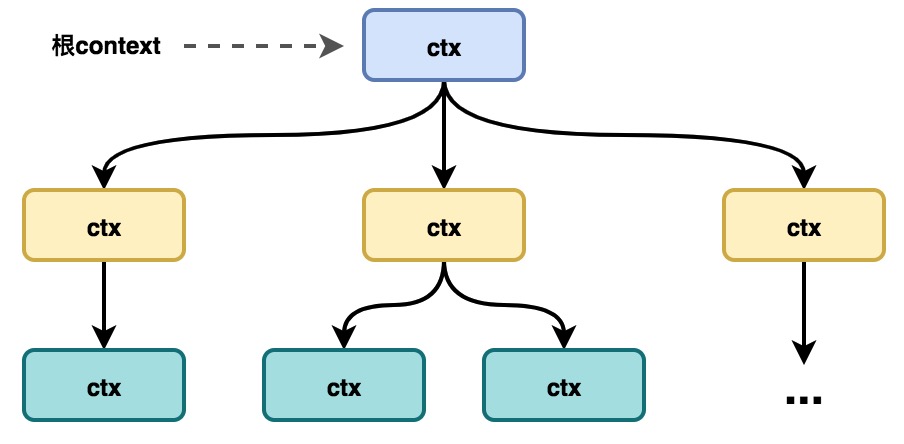
創建一個新的context,必須基於一個父context,新的context又可以作爲其他context的父context。所有context在一起構造成一個context樹。
Context使用示例
Context一大用處就是超時控制。我們先看一個簡單用法。
func main() {
	ctx, cancel := context.WithTimeout(context.Background(), 3 * time.Second)
	defer cancel()
	go SlowOperation(ctx)
	go func() {
		for {
			time.Sleep(300 * time.Millisecond)
			fmt.Println("goroutine:", runtime.NumGoroutine())
		}
	}()
	time.Sleep(4 * time.Second)

}

func SlowOperation(ctx context.Context) {
	done := make(chan int, 1)
	go func() { // 模擬慢操作
		dur := time.Duration(rand.Intn(5)+1) * time.Second
		time.Sleep(dur)
		done <- 1
	}()

	select {
	case <-ctx.Done():
		fmt.Println("SlowOperation timeout:", ctx.Err())
	case <-done:
		fmt.Println("Complete work")
	}
}
上面代碼會不停打印當前groutine數量,可以觀察到SlowOperation函數執行超時之後,goroutine數量由4個變成2個,相關goroutetine退出了。源碼可以去go playground查看。
再看一個關於超時處理的例子, 源碼可以去go playground查看:
//
// 根據github倉庫統計信息接口查詢某個倉庫信息
func QueryFrameworkStats(ctx context.Context, framework string) <-chan string {
	stats := make(chan string)
	go func() {
		repos := "https://api.github.com/repos/" + framework
		req, err := http.NewRequest("GET", repos, nil)
		if err != nil {
			return
		}
		req = req.WithContext(ctx)

		client := &http.Client{}
		resp, err := client.Do(req)
		if err != nil {
			return
		}

		data, err := ioutil.ReadAll(resp.Body)
		if err != nil {
			return
		}
		defer resp.Body.Close()
		stats <- string(data)
	}()

	return stats
}

func main() {
	ctx, cancel := context.WithTimeout(context.Background(), 3*time.Second)
	defer cancel()
	framework := "gin-gonic/gin"
	select {
	case <-ctx.Done():
		fmt.Println(ctx.Err())
	case statsInfo := <-QueryFrameworkStats(ctx, framework):
		fmt.Println(framework, " fork and start info : ", statsInfo)
	}
}
Context另外一個用途就是傳遞上下文信息。從WithValue方法我們可以創建一個可以儲存鍵值的context
Context源碼分析
Context接口
首先我們來看下Context接口
type Context interface {
	Deadline() (deadline time.Time, ok bool)
    Done() <-chan struct{}
    Err() error
    Value(key interface{}) interface{}
}
Context接口一共包含四個方法:
- Deadline:返回綁定該context任務的執行超時時間,若未設置,則ok等於false
- Done:返回一個只讀通道,當綁定該context的任務執行完成並調用cancel方法或者任務執行超時時候,該通道會被關閉
- Err:返回一個錯誤,如果Done返回的通道未關閉則返回nil,如果context如果被取消,返回
Canceled錯誤,如果超時則會返回DeadlineExceeded錯誤 - Value:根據key返回,存儲在context中k-v數據
實現Context接口的類型
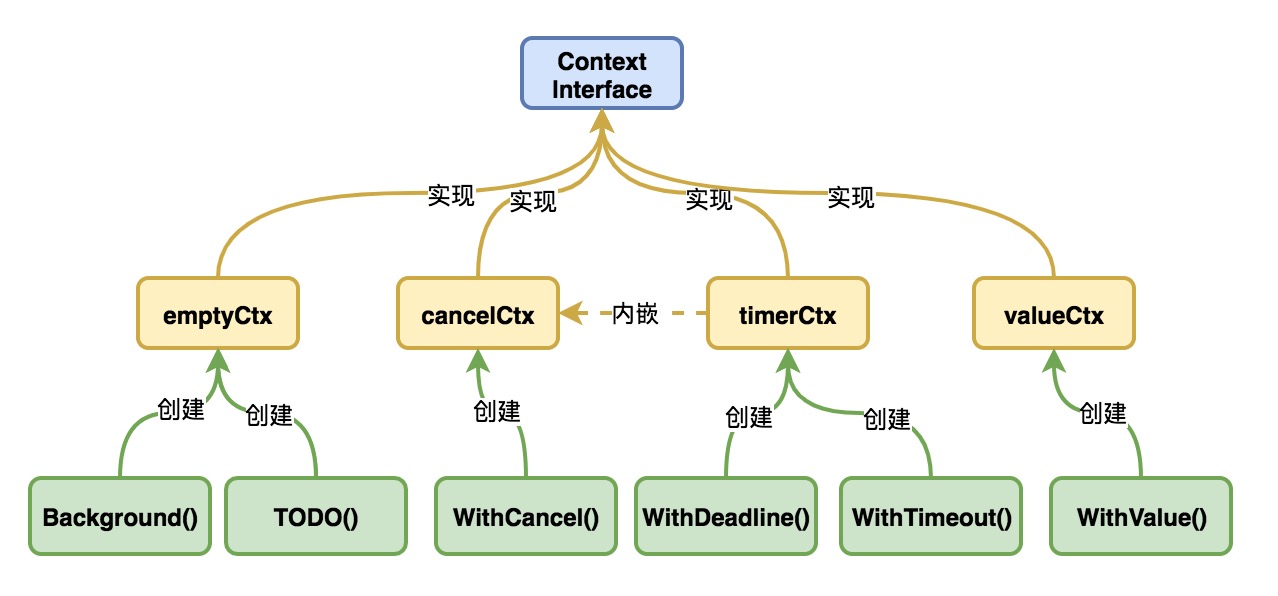
Context一共有4個類型實現了Context接口, 分別是emptyCtx, cancelCtx,timerCtx,valueCtx。每個類型都關聯一個創建方法。
emptyCtx
emptyCtx是int類型,emptyCtx實現了Context接口,是一個空context,只能作爲根context。
type emptyCtx int //

func (*emptyCtx) Deadline() (deadline time.Time, ok bool) {
	return
}

func (*emptyCtx) Done() <-chan struct{} {
	return nil
}

func (*emptyCtx) Err() error {
	return nil
}

func (*emptyCtx) Value(key interface{}) interface{} {
	return nil
}

func (e *emptyCtx) String() string {
	switch e {
	case background:
		return "context.Background"
	case todo:
		return "context.TODO"
	}
	return "unknown empty Context"
}
Background/TODO
context包還提供兩個函數返回emptyCtx類型。
var (
	background = new(emptyCtx)
	todo       = new(emptyCtx)
)

func Background() Context {
	return background
}

func TODO() Context {
	return todo
}
Background用於創建根context,一般用於主函數、初始化和測試中,我們創建的context一般都是基於Bacground創建的。TODO用於當我們不確定使用什麼樣的context的時候使用。
cancelCtx
cancelCtx支持取消操作,取消同時也會對實現了canceler接口的子代進行取消操作。我們來看下cancelCtx結構體和cancelceler接口:
type cancelCtx struct {
	Context
	mu       sync.Mutex
	done     chan struct{}
	children map[canceler]struct{}
	err      error
}

type canceler interface {
	cancel(removeFromParent bool, err error)
	Done() <-chan struct{}
}
cancelCtx:
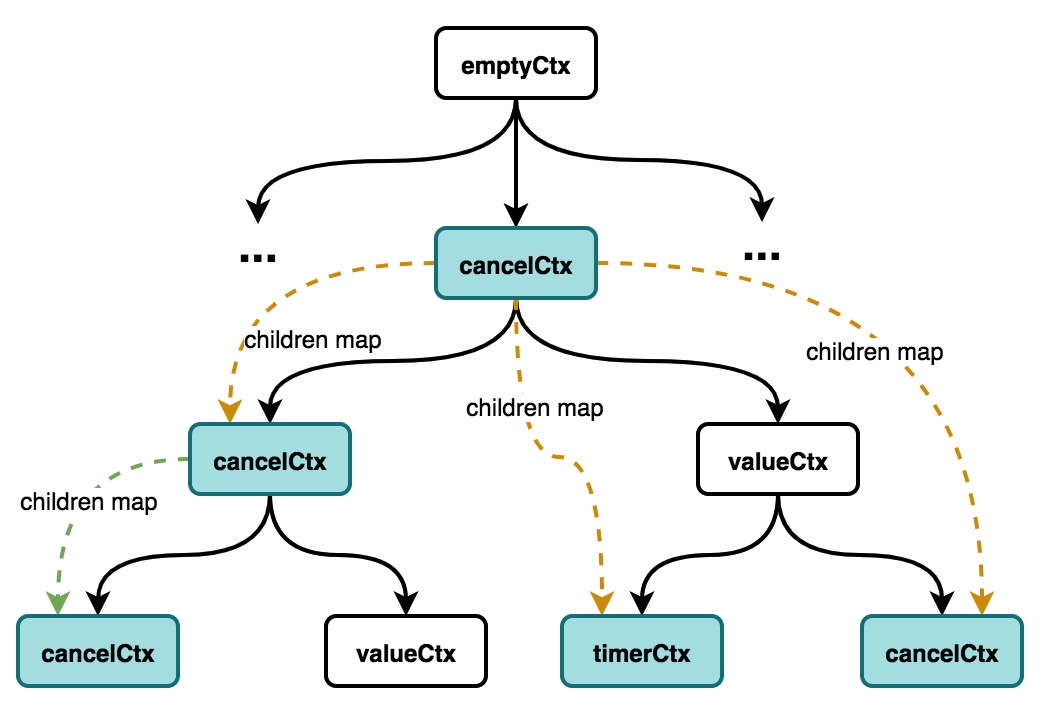
Context變量存儲其父contextdone變量定義了一個通道,並且只在第一次取消調用才關閉此通道。該通道是惰性創建的children是一個映射類型,用來存儲其子代context中實現的canceler,當該context取消時候,會遍歷該映射來讓子代context進行取消操作err記錄錯誤信息,默認是nil,僅當第一次cancel調用時候,纔會設置。
我們分別來看下cancelCtx實現的Done,Err,cancel方法。
func (c *cancelCtx) Done() <-chan struct{} {
	c.mu.Lock() // 加鎖
	if c.done == nil {
    	// done通道惰性創建,只有調用Done方法時候纔會創建
		c.done = make(chan struct{})
	}
	d := c.done
	c.mu.Unlock()
	return d
}

func (c *cancelCtx) Err() error {
	c.mu.Lock()
	err := c.err
	c.mu.Unlock()
	return err
}

func (c *cancelCtx) cancel(removeFromParent bool, err error) {
	if err == nil {
    	// 取消操作時候一定要傳遞err信息
		panic("context: internal error: missing cancel error")
	}
	c.mu.Lock()
	if c.err != nil {
    	// 只允許第一次cancel調用操作,下一次進來直接返回
		c.mu.Unlock()
		return
	}
	c.err = err
	if c.done == nil {
    	// 未先進行Done調用,而先行調用Cancel, 此時done是nil,
    	// 這時候複用全局已關閉的通道
		c.done = closedchan
	} else {
    	// 關閉Done返回的通道,發送關閉信號
		close(c.done)
	}
    // 子級context依次進行取消操作
	for child := range c.children {
		child.cancel(false, err)
	}
	c.children = nil
	c.mu.Unlock()

	if removeFromParent {
    	// 將當前context從其父級context中children map中移除掉,父級Context與該Context脫鉤。
    	// 這樣當父級Context進行Cancel操作時候,不會再改Context進行取消操作了。因爲再取消也沒有意義了,因爲該Context已經取消過了
		removeChild(c.Context, c)
	}
}

func removeChild(parent Context, child canceler) {
	p, ok := parentCancelCtx(parent)
	if !ok {
		return
	}
	p.mu.Lock()
	if p.children != nil {
		delete(p.children, child)
	}
	p.mu.Unlock()
}

func parentCancelCtx(parent Context) (*cancelCtx, bool) {
	for {
		switch c := parent.(type) {
		case *cancelCtx:
			return c, true
		case *timerCtx:
			return &c.cancelCtx, true
		case *valueCtx: // 當父級context是不支持cancel操作的ValueCtx類型時候,向上一直查找
			parent = c.Context
		default:
			return nil, false
		}
	}
}
注意parentCancelCtx找到的節點不一定是就是父context,有可能是其父輩的context。可以參考下面這種圖:
WithCancel
接下來看cancelCtx類型Context的創建。WithCancel會創一個cancelCtx,以及它關聯的取消函數。
type CancelFunc func()

func WithCancel(parent Context) (ctx Context, cancel CancelFunc) {
	// 根據父context創建新的cancelCtx類型的context
	c := newCancelCtx(parent)
    // 向上遞歸找到父輩,並將新context的canceler添加到父輩的映射中
	propagateCancel(parent, &c)
	return &c, func() { c.cancel(true, Canceled) }
}

func newCancelCtx(parent Context) cancelCtx {
	return cancelCtx{Context: parent}
}

func propagateCancel(parent Context, child canceler) {
	if parent.Done() == nil {
    	// parent.Done()返回nil表明父Context不支持取消操作
        // 大部分情況下,該父context已是根context,
        // 該父context是通過context.Background(),或者context.ToDo()創建的
		return
	}
	if p, ok := parentCancelCtx(parent); ok {
		p.mu.Lock()
		if p.err != nil {
        	// 父conext已經取消操作過,
        	// 子context立即進行取消操作,並傳遞父級的錯誤信息
			child.cancel(false, p.err)
		} else {
			if p.children == nil {
				p.children = make(map[canceler]struct{})
			}
			p.children[child] = struct{}{}
            // 將當前context的取消添加到父context中
		}
		p.mu.Unlock()
	} else {
    	// 如果parent是不可取消的,則監控parent和child的Done()通道
		go func() {
			select {
			case <-parent.Done():
				child.cancel(false, parent.Err())
			case <-child.Done():
			}
		}()
	}
}
timerCtx
timerCtx是基於cancelCtx的context類型,它支持過期取消。
type timerCtx struct {
	cancelCtx
	timer *time.Timer
	deadline time.Time
}

func (c *timerCtx) Deadline() (deadline time.Time, ok bool) {
	return c.deadline, true
}

func (c *timerCtx) String() string {
	return contextName(c.cancelCtx.Context) + ".WithDeadline(" +
		c.deadline.String() + " [" +
		time.Until(c.deadline).String() + "])"
}

func (c *timerCtx) cancel(removeFromParent bool, err error) {
	c.cancelCtx.cancel(false, err)
	if removeFromParent {
    	// 刪除與父輩context的關聯
		removeChild(c.cancelCtx.Context, c)
	}
	c.mu.Lock()
	if c.timer != nil {
    	// 停止timer並回收
		c.timer.Stop()
		c.timer = nil
	}
	c.mu.Unlock()
}
WithDeadline
WithDeadline會創建一個timerCtx,以及它關聯的取消函數
func WithDeadline(parent Context, d time.Time) (Context, CancelFunc) {
	if cur, ok := parent.Deadline(); ok && cur.Before(d) {
    	// 如果父context過期時間早於當前context過期時間,則創建cancelCtx
		return WithCancel(parent)
	}
	c := &timerCtx{
		cancelCtx: newCancelCtx(parent),
		deadline:  d,
	}
	propagateCancel(parent, c)
	dur := time.Until(d)
	if dur <= 0 {
    	// 如果新創建的timerCtx正好過期了,則取消操作並傳遞DeadlineExceeded
		c.cancel(true, DeadlineExceeded)
		return c, func() { c.cancel(false, Canceled) }
	}
	c.mu.Lock()
	defer c.mu.Unlock()
	if c.err == nil {
    	// 創建定時器,時間一到執行context取消操作
		c.timer = time.AfterFunc(dur, func() {
			c.cancel(true, DeadlineExceeded)
		})
	}
	return c, func() { c.cancel(true, Canceled) }
}
WithTimeout
WithTimeout用來創建超時就會取消的context,內部實現就是WithDealine,傳遞給WithDealine的過期時間就是當前時間加上timeout時間
func WithTimeout(parent Context, timeout time.Duration) (Context, CancelFunc) {
	return WithDeadline(parent, time.Now().Add(timeout))
}
valueCtx
valueCtx是可以傳遞共享信息的context。
type valueCtx struct {
	Context
	key, val interface{}
}

func (c *valueCtx) Value(key interface{}) interface{} {
	if c.key == key {
    	// 當前context存在當前的key
		return c.val
	}

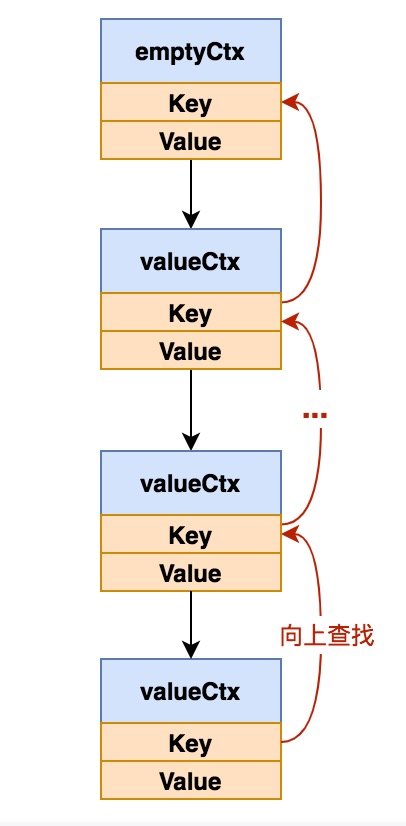
    // 當前context不存在,則會沿着context樹,向上遞歸查找,直到根context,如果一直未找到,則會返回nil
	return c.Context.Value(key)
}
如果當前context不存在該key,則會沿着context樹,向上遞歸查找,直到查找到根context,最後返回nil
WithValue
WithValue用來創建valueCtx。如果key是不可以比較的時候,則會發生恐慌。可以比較類型,可以參考Comparison_operators。key應該是不導出變量,防止衝突。
func WithValue(parent Context, key, val interface{}) Context {
	if key == nil {
		panic("nil key")
	}
	if !reflectlite.TypeOf(key).Comparable() {
		panic("key is not comparable")
	}
	return &valueCtx{parent, key, val}
}
總結
實現Context接口的類型
Context一共有4個類型實現了Context接口, 分別是emptyCtx, cancelCtx,timerCtx,valueCtx。
它們的功能與創建方法如下:
| 類型 | 創建方法 | 功能 |
|---|---|---|
| emptyCtx | Background()/TODO() | 用做context樹的根節點 |
| cancelCtx | WithCancel() | 可取消的context |
| timerCtx | WithDeadline()/WithTimeout() | 可取消的context,過期或超時會自動取消 |
| valueCtx | WithValue() | 可存儲共享信息的context |
Context實現兩種遞歸
Context實現兩種方向的遞歸操作。
| 遞歸方向 | 目的 |
|---|---|
| 向下遞歸 | 當對父Context進去手動取消操作,或超時取消時候,向下遞歸處理對實現了canceler接口的後代進行取消操作 |
| 向上隊規 | 當對Context查詢Key信息時候,若當前Context沒有當前K-V信息時候,則向父輩遞歸查詢,一直到查詢到跟節點的emptyCtx,返回nil爲止 |
Context使用規範
使用Context的是應該準守以下原則來保證在不同包中使用時候的接口一致性,以及能讓靜態分析工具可以檢查context的傳播:
- 不要將Context作爲結構體的一個字段存儲,相反而應該顯示傳遞Context給每一個需要它的函數,Context應該作爲函數的第一個參數,並命名爲ctx
- 不要傳遞一個nil Context給一個函數,即使該函數能夠接受它。如果你不確定使用哪一個Context,那你就傳遞context.TODO
- context是併發安全的,相同的Context能夠傳遞給運行在不同goroutine的函數